For a lot of children, the online world is more real than the real world. It is crucial to our children’s wellbeing that we understand what they see online, what is out there, both good and bad, and how it impacts their physical and emotional wellbeing.
The problem, as many of us would eagerly admit, is that we feel we don’t really understand the online world. Instagram, Snapchat, and Twitter are bewildering enough, without even mentioning 4chan and TOR. Furthermore, we don’t feel that we have the technical skills to navigate this complex landscape.
The good news is that it’s not that difficult to put certain technical controls in place to protect your children online. Far more importantly, the best thing you can do to protect your children is to talk to them; set clear boundaries for what and when they access online, but also to be there for your children when they make a mistake, or when they have gone too far. Isn’t that what parenting fundamentally comes down to?
Mobile phones and apps
According to consumer research by Influence Central, the average age that children get their first smartphone is 10 years old. Giving your child a smartphone comes with numerous benefits. A phone is an excellent safety tool; your child can use it to let you know they safely reached their destination, call you for a ride, or call in case of an emergency. You can also use the GPS on their phone to track their location. Knowing that you can always reach your child is a tremendous peace of mind for a parent.
Smartphones, however, can also be misused, and in some situations can make children vulnerable. Because smartphones are personal devices, we don’t often know what our children do on them, or how they use them.
If you’re considering giving your child a smartphone, it helps to have some clearly outlined guidelines in place beforehand, so everyone is on the same page. If your child already has a smartphone, it’s not too late to review the family rules. Demonstrate to them that having a smartphone is a big responsibility.
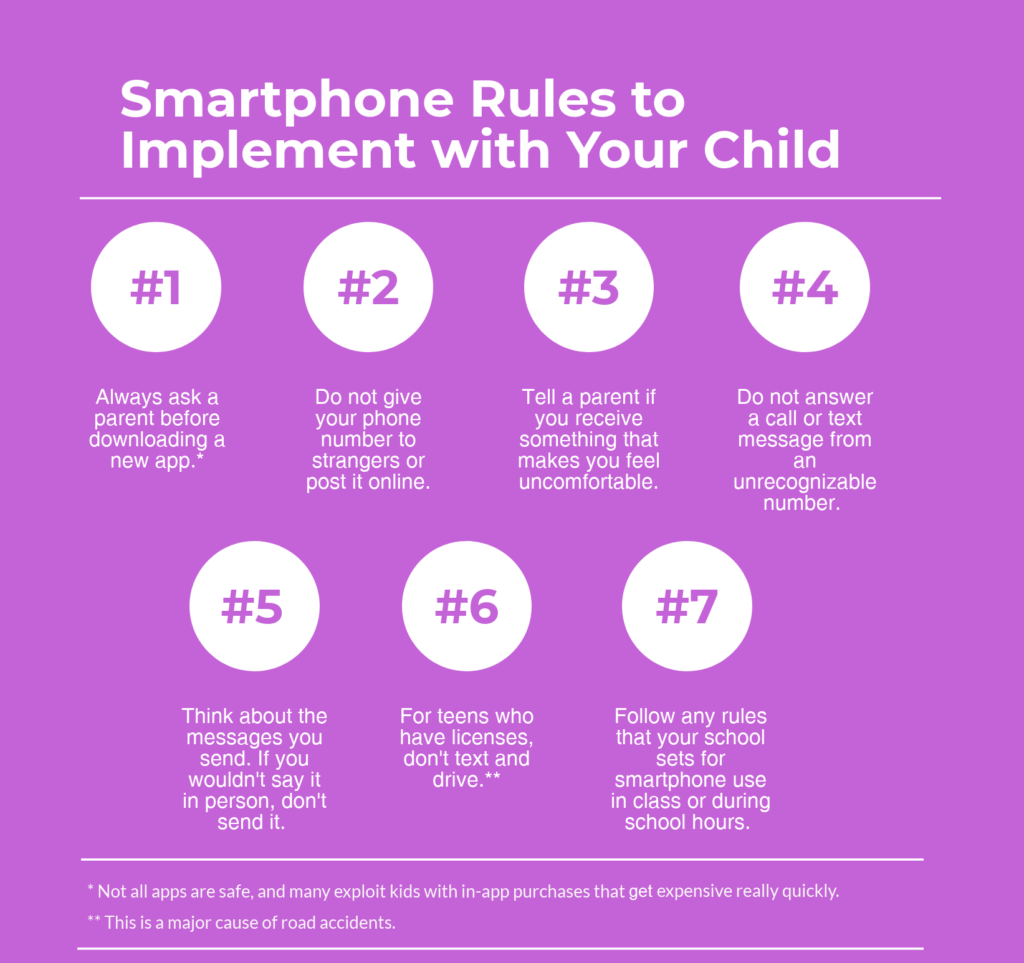
There are many precautions you can take to implement phone safety:
- Have your kid sign a smartphone contract before you give them one. Print out a list of cellphone rules and stick it in a public place in your home.
- Download parental controls. Parental control apps for younger children enable you to limit your child’s usage, determine their location, and monitor their calls and messages. Apps also allow you to shut off certain functions at different times. For example, disabling text messaging while driving.
- Set limits when your child can use a smartphone and for how long each day.
- Set a personal example for your child. Don’t bring your phone to the dinner table, and don’t text and drive.
- Set up a charging station in a central location in your home. Phones should stay out of your child’s bedroom and they won’t be in use late at night.
- You can also install an app to monitor your child’s activity. Keepers is one type of app that alerts parents about harmful, abusive, or suspicious messages, and it includes a tracking device to show your kid’s location in real time.